%20(2)%20(1).501f217dce8af37ce1a77a15ef2f68f0.webp)
All About Fexofenadine Hydrochloride
If you find yourself in bouts of sneezing after you’ve been outside, chances are that you have allergic rhinitis. This condition may also bring about other reactions such as sneezing, itchy eyes, and a runny nose. That’s where fexofenadine comes in. Although the name sounds very scientific, and perhaps a little intimidating, it’s an active component in Telfast products, and it is very helpful in treating allergic rhinitis and hives. Read on to discover how fexofenadine works, the required dosage, and potential side effects.
What Is Fexofenadine Used For?
To put things simply, fexofenadine is an antihistamine that temporarily relieves allergy symptoms. Whether you are dealing with outdoor allergens, like pollen, or indoor ones, like pet dander and dust mites, fexofenadine can help relieve allergy symptoms.
Allergies can strike people of any age, as both children and adults can experience allergies, with unwanted symptoms like a runny nose, sneezing, itchy, watery eyes, itching of the nose or throat1, and hives.
So, how does fexofenadine work? It’s known as a second-generation antihistamine drug, which means that it provides relief by attaching to the histamine receptors (H1) in the body, blocking and relieving these unwanted allergy symptoms, all while being non-drowsy.
Fexofenadine in Telfast Products
Telfast can relieve allergy symptoms like sneezing, itchy and watery eyes, hives, and a runny nose thanks to fexofenadine. You can choose between non-drowsy 12-hour and 24- hour relief tablets to relieve allergy symptoms.
How and When to Take Fexofenadine (and When You Shouldn’t)
Telfast offers a range of fexofenadine products that can relieve allergy symptoms, such as Telfast 60mg tablets, Telfast 120mg tablets, Telfast 180mg tablets, and more.
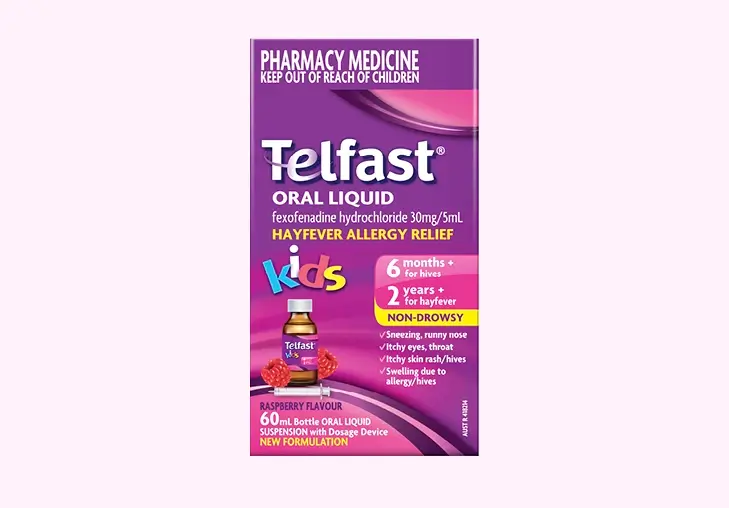
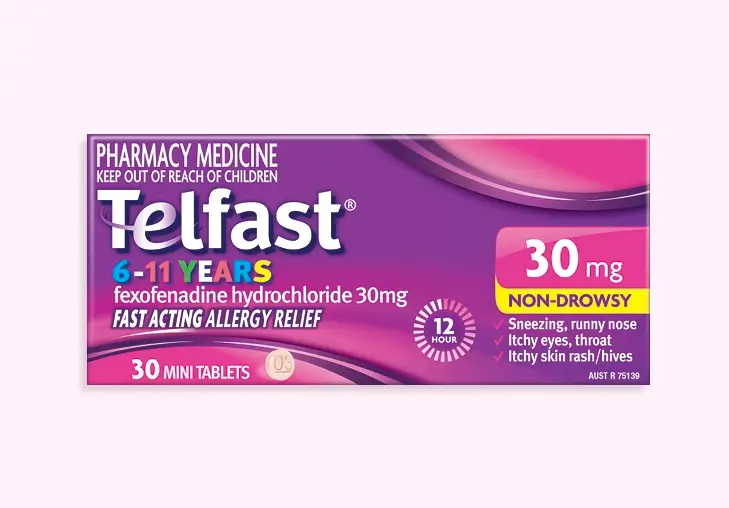
Children aged 12 and above, and adults, can take one 180 mg tablet with water each day. For children under 12, you can use a children’s product such as Telfast Oral Liquid For Kids or Telfast 6-11 years 30mg Tablets.
It’s not advisable to take more than one tablet of Telfast180 mg fexofenadine in 24 hours, and it’s also not recommended for people who are:
- pregnant or breastfeeding except when advised by your Doctor or Pharmacist
For further instructions, follow the directions of use on the product label.
Although fexofenadine is safe to use, you have to use the product as directed to ensure you stay safe. Always read the label and follow the directions for use.
You shouldn’t take fexofenadine if:
- you’ve had an allergic reaction to it in the past.
Consult your doctor before taking fexofenadine or Telfast if:
- you have any allergies to any other medicines, foods, preservatives or dyes
- you are pregnant or breastfeeding.
When using fexofenadine, do not:
- take more than directed
- use with other antihistamines.
Potential Side Effects
Like with any medication, adverse results can arise with the use of fexofenadine. Make sure you check the warnings on the product label for any potential side effects.2
When should you go to the doctor?
All medicines can have side effects. If you do experience any side effects, most of them are minor and temporary.
However, some side effects may need medical attention. If you notice any of the following side effects, speak to your doctor:1
- nausea
- headache
- tiredness
- dizziness
- drowsiness
Tell your doctor or pharmacist if you notice anything else that may be making you feel unwell.
Frequently Asked Questions About Fexofenadine
Is fexofenadine an effective antihistamine?
Fexofenadine tablets come in different strengths like 60mg, 120mg and 180mg and should be taken by adults. Fexofenadine offers effective, fast-acting, and non-drowsy relief with no impact on concentration.2,3,4
Is it OK to take fexofenadine every day?
Yes, you can take fexofenadine regularly if you are using it to relieve symptoms of conditions like hay fever. Ensure to take it as directed on the package label.
What can you not take with fexofenadine?
Do not use with other antihistamines.
Fexofenadine, the active ingredient in Telfast, is a non-drowsy antihistamine that is helpful in treating allergy symptoms such as itching, sneezing, a runny nose, and hives. It can be used by people over 12 years old. For proper use, make sure you follow the directions on the product package, and consult your doctor if your symptoms continue even after using Telfast.
How to take Telfast ?
Take Telfast with a glass of water to make it easier to swallow.
Telfast may be taken with or without food.
Find your Telfast®
.2026-02-20-14-25-56.svg)
%20(1).2025-10-29-08-52-24.webp)
Related Articles



References
- https://www.ebs.tga.gov.au/ebs/picmi/picmirepository.nsf/pdf?OpenAgent&id=CP-2021-CMI-01849-1
- Fexofenadine: antihistamine that relieves allergy symptoms - NHS (www.nhs.uk)
- Ansotegui et al. (2024). Curr Med Res Opin, 40(8), 1297-1309. Sponsored by Sanofi.
- Meltzer et al. (2021). Allergy Asth Clin Immunol J, 17(1), 113. Sponsored by Sanofi.
MAT-AU-2601537-1.0 - July2026